Floor levelling in Warrington: why uneven subfloors cause LVT and carpet to fail, and how to fix it before fitting
Floor levelling in Warrington done properly, from concrete grinding to self-levelling compound. Signature Flooring Solutions explains why prep decides the result.
The floor you see is only as good as the floor beneath it
A new LVT laid over a lumpy concrete slab. A carpet that ripples within six months. Vinyl that bubbles at the seams. In almost every case, the culprit is not the material. It is the subfloor that was never properly levelled before the fitting began.
Floor levelling is unglamorous work. Nobody photographs it for Instagram. But after over 30 years of experience in the flooring industry, we can tell you with certainty: it is the step that decides whether your new floor looks immaculate in five years or fails in five months. We never cut corners when it comes to preparation.
What floor levelling actually involves
"Levelling" is a catch-all term, and it is worth being precise about what it means in practice, because the method depends entirely on what is already there.
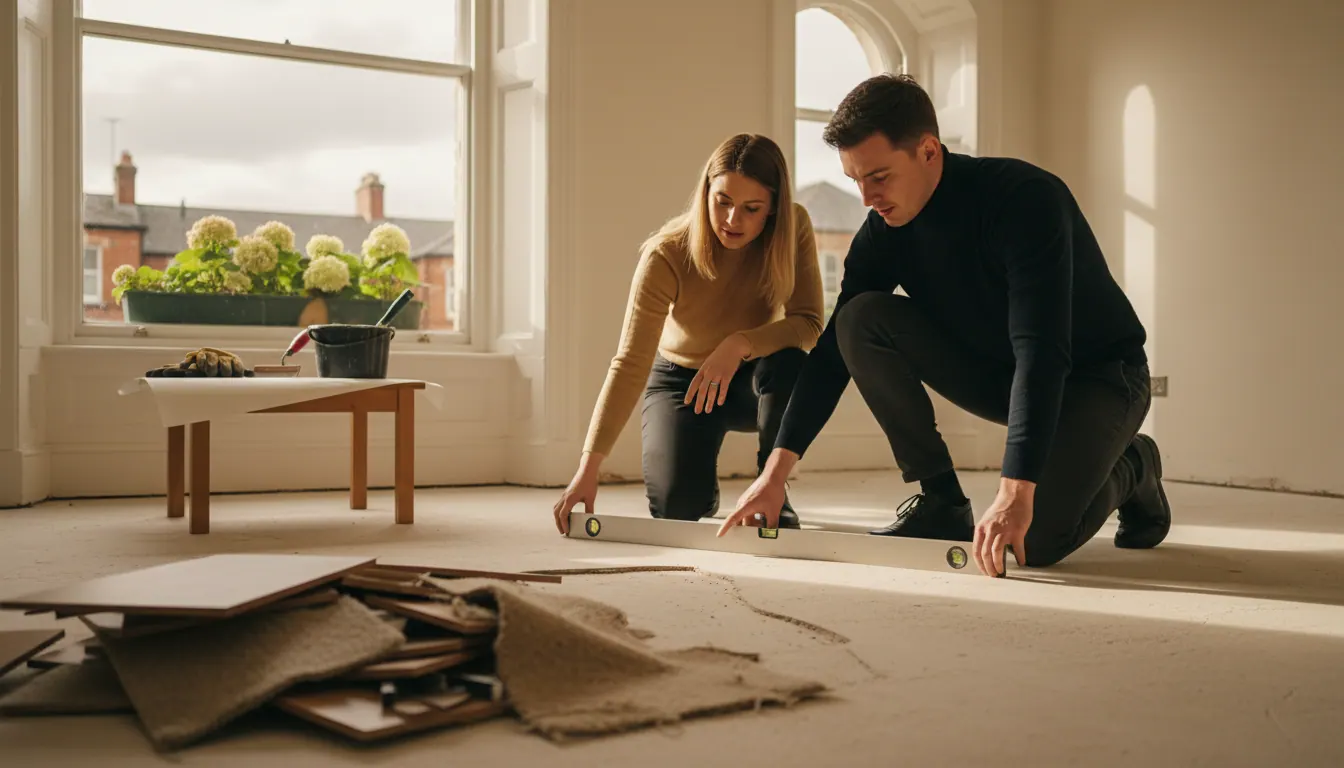
Concrete subfloors (common in Warrington extensions, ground floors of Victorian terraces and commercial premises) often have high spots, hollows, crack repairs and old adhesive residue. Before any compound goes down, those high spots need grinding back, loose material needs removing, and the surface needs to be sound and dust-free. Only then does a self-levelling compound do its job properly.
Timber subfloors (the norm in most 1930s semis and upstairs rooms across Grappenhall, Stockton Heath and Padgate) need a different approach. The boards have to be checked for movement, squeaks and rot. Any flex needs addressing. Then a layer of plywood is typically fixed across the boards to create a stable, flat deck before flooring goes on top.
New-build and extension floors can catch people out. The concrete may look fine but still be uneven by several millimetres across a room. That is enough to telegraph through LVT or vinyl and cause problems with click-lock edges over time.
The specific method we use depends on the subfloor type, the condition, and the flooring that is going on top. It is never one-size-fits-all.
Why it matters more for some floors than others
Not every floor is equally unforgiving of an imperfect subfloor, but the ones that are most popular in Warrington homes right now happen to be among the most demanding.
LVT (luxury vinyl tile) is rigid. Any bump or hollow in the subfloor will eventually show through the surface, or cause the locking joints to stress and separate. This applies whether it is a plank format or LVT herringbone, which is even less forgiving because the angled pattern amplifies any deviation in the base.
Sheet vinyl transfers subfloor imperfections quickly, especially in wet areas like utility rooms and bathrooms where the material is thin. A poorly levelled subfloor also makes achieving a watertight seam harder. If you are interested in how seam placement works in wet areas, our article on vinyl flooring for Warrington bathrooms and utility rooms goes into more detail.
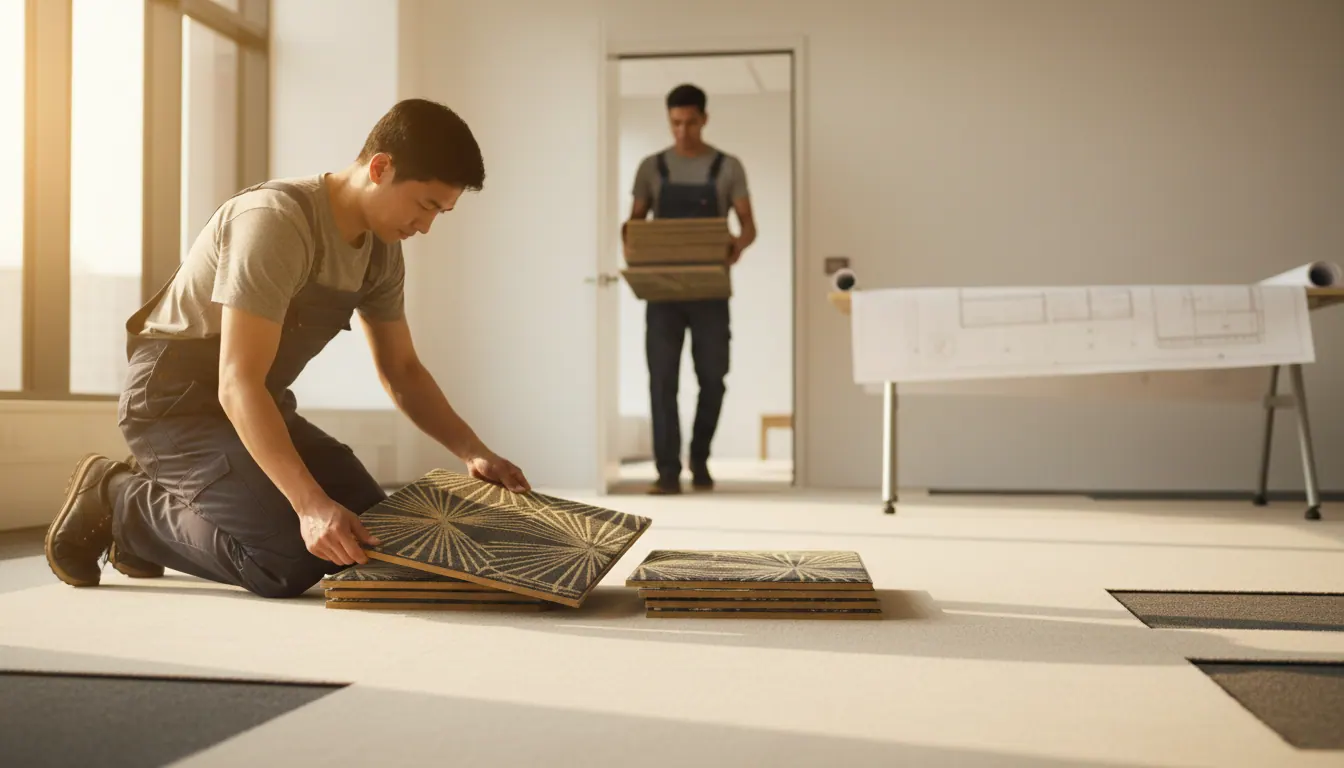
Carpet is more forgiving, but only up to a point. A significantly uneven concrete floor will still show movement and wear unevenly. Commercial carpet tiles in particular need a flat, clean substrate to sit correctly and allow individual tiles to be lifted and replaced cleanly.
Do you need to PVA before self-levelling compound?
This is one of the most common questions we hear, and the honest answer is: it depends on the porosity of the substrate.
On a highly porous or dusty concrete floor, the self-levelling compound can dry too quickly at the surface, which leads to cracking and poor adhesion. Applying a diluted PVA primer (or a purpose-made bonding primer) slows that moisture loss and helps the compound key into the surface properly.
On a less porous or previously sealed floor, priming is still good practice because it improves adhesion. Skipping it to save time is one of those shortcuts that can cost far more to put right later.
We always assess the substrate before deciding on the correct primer. It is a small step that makes a significant difference to the finished result.
Concrete floor levelling in Warrington: what to expect
Warrington has a wide mix of property types, and the subfloor conditions vary enormously. A ground-floor flat in a converted mill building in the town centre might have a concrete slab that is decades old, uneven and contaminated with old adhesive. A new-build in Chapelford or Great Sankey might have a screed that looks perfect but has a low spot in the corner that needs addressing before LVT goes down.
The process typically runs like this:
- Inspect and test the subfloor for moisture, movement and level
- Grind down high spots and remove loose or contaminated material
- Repair cracks and fill any significant voids
- Apply the appropriate primer
- Pour and spread self-levelling compound, feathered out to achieve a consistent flat plane
- Allow adequate drying time before any flooring is fitted
That last point matters more than people expect. Rushing the drying time is another common cause of floor failures. We always allow the compound to cure properly before we bring flooring into the room.
Timber subfloors and plywood overlaying
For the many Warrington homes with suspended timber floors, the approach is different but equally important. Old floorboards move. They expand and contract with the seasons. They have gaps. Fitting LVT or vinyl directly onto boards without an overlay is a route to a floor that creaks, flexes and eventually damages the flooring above it.
Plywood overlaying solves this. A correctly specified and fixed plywood deck ties the boards together, eliminates flex and gives a smooth, stable surface. The ply is screwed at close centres, the joints are staggered, and the whole surface is checked for flatness before anything goes on top.
For homes in Orford, Woolston, Latchford and other areas with older housing stock, this is a routine part of the job, not an optional extra.
What a properly levelled floor makes possible
James Sumner, who had herringbone flooring fitted throughout his house, put it well:
"Really pleased with our herringbone flooring throughout the house and everything was finished to a high standard. The lads were great from start to finish and we would highly recommend 👍🏼"
A result like that, where the pattern reads cleanly across multiple rooms, is only possible when the subfloor is right. LVT herringbone is one of the most visually demanding formats we fit. The angled joints catch the light, and any deviation in the base plane shows. Getting the preparation right is what allows the pattern to do its job. If you are curious about the setting-out process for herringbone, our article on herringbone flooring in Warrington period homes explains how we approach it.
Commercial floor levelling in Warrington
Subfloor preparation in commercial settings carries additional pressures. Downtime costs money, so we work efficiently and plan the preparation sequence carefully. But we do not rush the compound drying time. That is non-negotiable.
We work across offices, shops, restaurants, schools, care homes and healthcare environments throughout Warrington and the wider Cheshire area. Each setting has its own requirements: a care home corridor needs a smooth, seamless surface for wheeled equipment; a restaurant kitchen needs a subfloor that will support sheet vinyl without seam failure; a retail unit needs a flat base for commercial carpet tiles that will take heavy footfall.
The preparation work is the same discipline in every case. Flat, sound, dry. Everything else follows from that.
Frequently asked questions about floor levelling in Warrington
Do I need to level my floor before fitting LVT or vinyl? Almost always, yes. LVT and sheet vinyl are unforgiving of subfloor imperfections. Even a few millimetres of unevenness can show through the finished surface or cause the flooring to fail at the joints over time. We assess every subfloor before we start and level where needed.
Can you level a concrete floor that has old adhesive or contamination on it? Yes, but the contamination needs to be addressed first. Old adhesive, paint and loose material have to be removed or ground back before any levelling compound will bond correctly. Pouring compound over a contaminated surface is one of the most common causes of levelling failures we see when we are called to inspect a floor that has gone wrong.
Does timber flooring need levelling too? Timber subfloors need a different approach. Rather than self-levelling compound, we typically use a plywood overlay to create a flat, stable deck. The boards beneath are checked for movement and fixed down securely before the ply goes on. This applies whether the final floor is LVT, vinyl or carpet.
How long does self-levelling compound take to dry before flooring can go down? It varies depending on the product, the depth of pour and the conditions in the room. Rushing this stage is a false economy. We always allow the compound to reach the correct cure before we fit flooring over it. Getting this right is part of what we mean by quality workmanship and attention to detail.
Get the foundation right
If you are planning new flooring in Warrington and want it done properly from the subfloor up, we are happy to take a look and give you honest advice on what is needed. No guesswork, no shortcuts.
Call us on 07946 765568 to talk through your project or arrange a visit. Your floor, our signature.