Vinyl flooring for Warrington bathrooms and utility rooms: why the seam matters in wet areas
Wetroom flooring Warrington done properly: we explain the right materials, how they're fixed and why subfloor prep decides everything. Supply and fit.
Wetroom flooring in Warrington: getting it right from the subfloor up
A wet room is one of the most demanding environments a floor covering ever faces. Constant moisture, bare feet, cleaning products, steam. Get the material or the installation wrong and you end up with lifting edges, mould tracking under the floor, or a slip hazard that no one wants. We fit wetroom flooring across Warrington and the wider Cheshire area regularly, and the questions we hear most often are the same: what goes down, how is it fixed, and what happens if the subfloor is not level? This article answers all of that properly.
What wetroom flooring actually is (and what it is not)
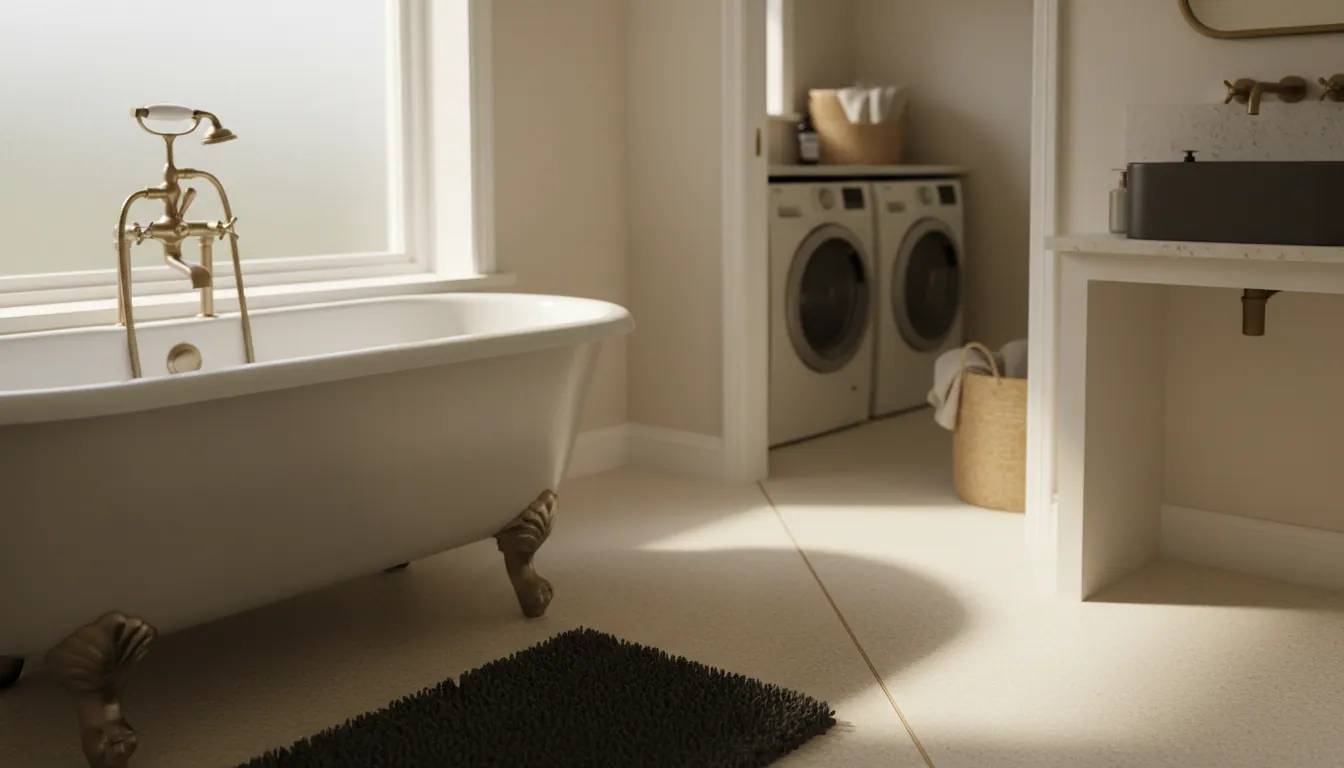
The term "wetroom flooring" covers a specific category of floor coverings designed to perform in permanently wet conditions. It is not laminate. It is not standard LVT clicked together without adhesive. It is not ceramic tile (that is a tiler's job, not ours). What we lay in wet rooms falls into two main categories.
Sheet vinyl with a welded seam. This is the most common and, in our view, the most reliable option for a domestic wet room. A heavy-gauge, slip-resistant sheet vinyl is cut to fit the room and the seams, where any exist, are heat-welded using a colour-matched welding rod. The result is a fully continuous, waterproof surface with no gaps for water to track through. The underside bonds to the subfloor with a pressure-sensitive adhesive appropriate for wet areas.
Safety flooring. Often used interchangeably with slip-resistant vinyl, safety flooring is a specific product category with a defined slip-resistance rating (usually R10 or above, sometimes higher for commercial settings). Brands like Polyflor Aquarius and Altro Aquarius are built for exactly this environment. The surface texture is designed to provide grip even when wet and soapy. We use these products in domestic wet rooms, commercial shower areas and any space where the floor will genuinely be standing water rather than just the occasional splash.
What wetroom flooring is NOT: laminate, engineered wood, standard click LVT, or carpet. None of those are appropriate. Laminate and wood will swell, delaminate and fail. Click LVT without full adhesive and sealed edges will lift at the joins. If anyone suggests those for a true wet room, push back.
Why subfloor preparation is everything in a wet room
We say this across all our work, but it matters even more here. In a wet room, the floor covering is bonded down fully. Any unevenness, any soft spot, any crack in the substrate beneath will telegraph through the vinyl over time and eventually break the bond or the material itself.
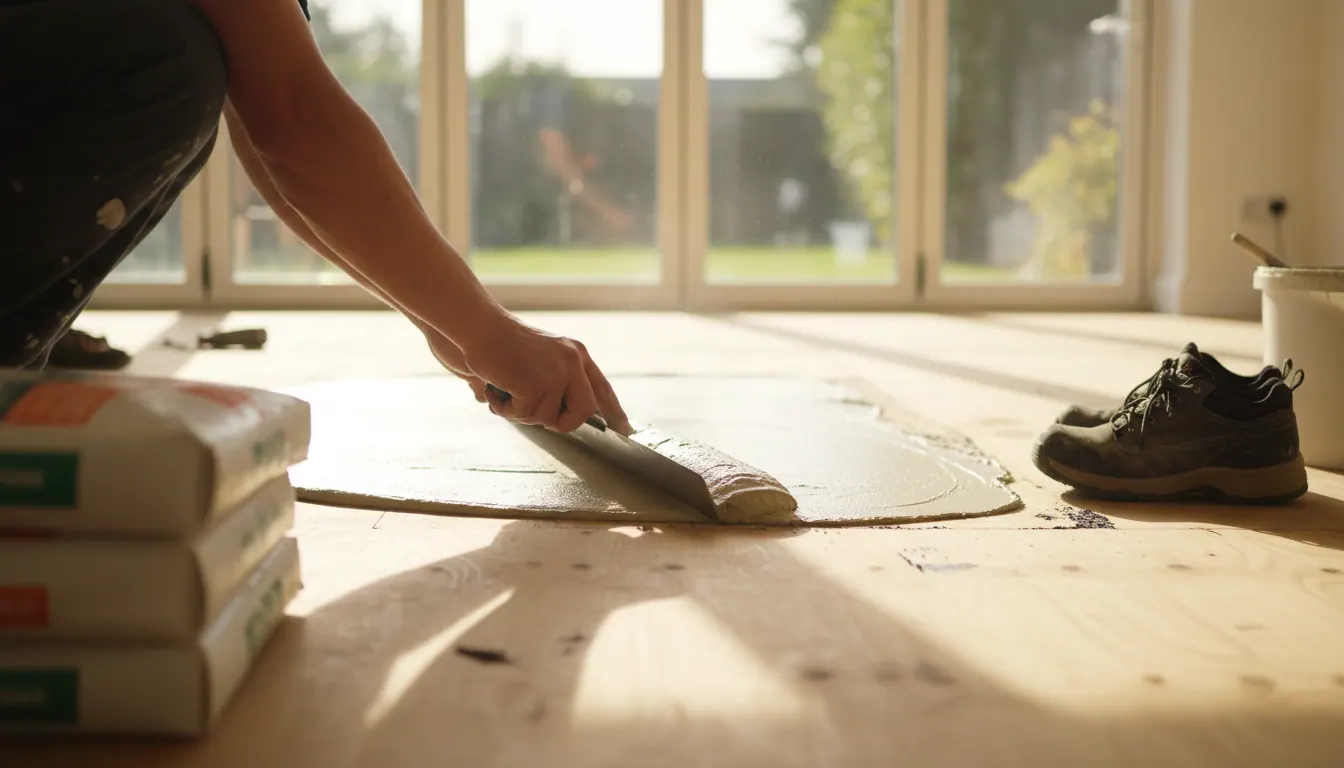
In Warrington's older housing stock, Victorian terraces in areas like Orford and Bewsey often have original timber floors that have moved, dried out and developed gaps. 1930s semis in Padgate or Stockton Heath sometimes have concrete oversite that has cracked or settled. Before any wetroom vinyl goes down, we assess the subfloor and, if needed, apply a latex levelling compound to bring it to a smooth, flat, stable surface.
We have written about this in more detail in our article on why subfloor preparation makes or breaks your new flooring in a Warrington extension, but the principle is the same here: the floor covering is only as good as what it is bonded to.
One specific issue in Warrington wet rooms: existing tiles. Many bathrooms being converted to wet rooms have ceramic tiles on the floor. We do not remove or relay tiles (that is a builder's or tiler's job), but if the tiles are sound, flat and well-bonded, we can often apply a skim of levelling compound over them to create a smooth surface before laying the vinyl on top. If the tiles are hollow, cracked or lifting, that needs to be addressed before we arrive.
The welded seam: why it matters more than anything else
A seam in a wet room vinyl that is not heat-welded is a liability. Water finds every gap. Over weeks and months, water tracking under an unsealed seam will lift the adhesive, breed mould, and eventually cause the whole floor to fail.
Heat welding fuses the two edges of vinyl together using a specialised welding gun and a rod of matching material. Done properly, the join is as strong as the sheet itself and fully waterproof. It is not a visible repair line. On a good installation, you have to know where the seam is to find it.
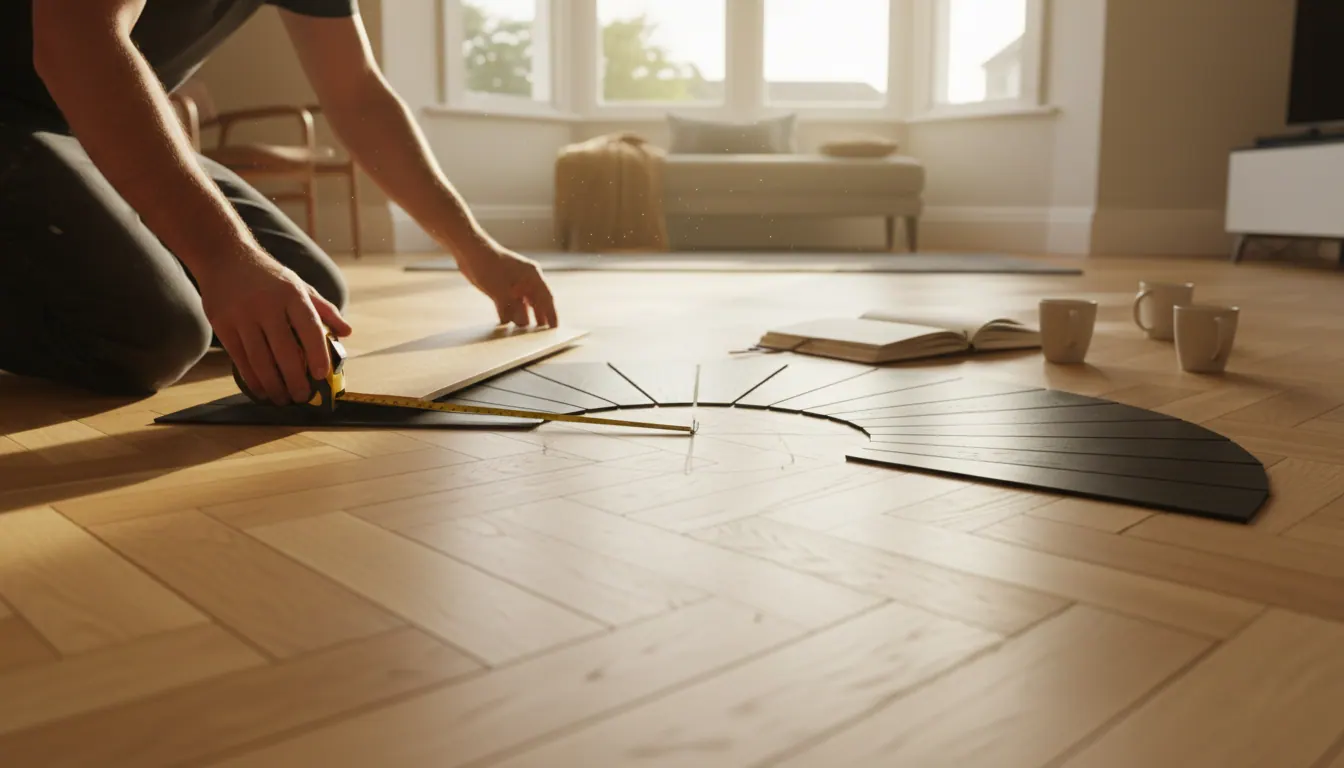
This is one of the reasons we always measure and plan the layout carefully before ordering material. In a small wet room, it is often possible to use a single piece with no seam at all, which is always the cleanest solution. Larger rooms will need a seam, and we plan it away from the drain, the highest-traffic areas and the wettest zones where possible.
What a customer found when they were undecided
Choosing wetroom flooring is genuinely confusing. The range of products, finishes and slip-resistance ratings is wide, and most people have not bought a wet room floor before. This is something we hear a lot, and it is exactly what happened for one of our customers:
"Harry came to fit our bathroom vinyl flooring. We were undecided on what to go for, but Harry gave us lots of options for our budget. We love the end result, thank you so much Harry. Great Quality, worked around us and our busy schedule to come and measure up and to fit the floor too. Overall excellent service. Will recommend Signature Flooring solutions to everyone."
, Danni Ashton, 5 stars
That process of working through the options together is a normal part of what we do. We supply as well as fit, so we can show samples, explain the differences between products and help you land on something that works for the room and for you.
Slip resistance: the rating that actually matters
Not all vinyl is slip-resistant. Standard decorative vinyl, however good it looks, may have an R9 slip rating or lower, which is not suitable for a wet room. Safety flooring starts at R10 and goes higher for commercial environments.
For a domestic wet room, R10 is the standard minimum. For a wet room used by elderly residents, young children, or anyone with mobility considerations, we would lean towards R11 or a product with a defined wet barefoot rating. These products exist, they look good, and the difference in aesthetics compared to standard vinyl is far smaller than it used to be.
If you are fitting out a commercial wet room, a gym shower, a changing room or a similar space in or around Warrington, the slip-resistance specification will need to match the use case. We can advise on that when we visit.
Frequently asked questions about wetroom flooring
What type of flooring is best for a wet room? For a true wet room, fully adhered sheet vinyl with a welded seam is the most reliable option. It creates a continuous, waterproof surface with no gaps. Safety flooring products with a defined slip-resistance rating (R10 or above) are ideal. Tiles are also used in wet rooms but that is a tiler's job, not a floor layer's. Laminate, engineered wood and click LVT are not suitable.
What do you put on the floor of a wet room? The floor covering itself sits on a prepared, flat subfloor. Before the vinyl goes down, any unevenness is corrected with a latex levelling compound. The vinyl is then bonded with a waterproof pressure-sensitive adhesive and any seams are heat-welded. The drain and the wall perimeter are finished with a silicone seal rather than a hard edge, to allow for the slight movement that happens in a wet environment.
What is wetroom flooring called? The products most commonly used are referred to as safety flooring or slip-resistant sheet vinyl. Specific product ranges include Polyflor Aquarius, Altro Aquarius and similar. These are heavy-gauge, fully adhered sheet materials rather than the click-together planks or tiles used in dry rooms.
How much does wetroom flooring cost? It depends on the room size, the product specified and the condition of the subfloor. If levelling work is needed, that adds time and material. We do not quote figures here because invented numbers help no one. Get in touch and we will measure up and give you an accurate quote for your specific room.
A note on new-build wet rooms and Warrington extensions
New-build homes across Warrington, Chapelford, Birchwood and the surrounding area sometimes come with wet rooms already formed but without a floor covering fitted. Developers often leave that to the buyer. If you have just taken on a new build or completed an extension with a wet room, the subfloor condition is usually good, but it still needs checking before anything goes down. Concrete needs to be dry and flat. Any dips or ridges need levelling.
If your project involves a knock-through or extension where the floor needs to run through from a dry area into a wet room, that is a more complex layout that needs careful planning. The transition between a fully adhered wet room vinyl and an adjoining floor covering needs to be handled properly at the threshold.
Ready to sort your wetroom flooring in Warrington?
If you have a wet room to floor, whether it is a bathroom conversion, a new extension or a commercial shower area, we are happy to come and look at it properly. Measure up, assess the subfloor, talk through the product options and give you a clear quote.
Get in touch with us and we will take it from there. Your floor, our signature.